
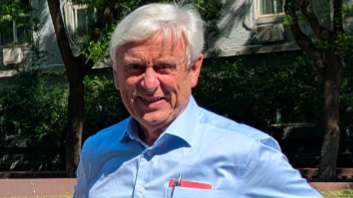
Social scientist Stein Kuhnle MAE has been a member of the Governance, Institutions and Policies section of Academia Europaea since 2012. One of his main scholarly interests for close to 5 decades has been the welfare state. His introduction to the Building Bridges plenary session “Survival of the Welfare State?” on 15 October will look back at the evolution of the welfare state, but also address challenges today.
Stein Kuhnle is a Professor emeritus at the Faculty of Social Sciences Department of Comparative Politics at the University of Bergen. He is also a steering group member at the Academia Europaea Bergen Knowledge Hub.
He gave some rather long, but very interesting answers when we asked him for a glimpse of his Building Bridges presentation.
– The welfare state has been of scholarly interest to you for many decades. What kinds of changes to the thinking around the welfare state have you seen through these decades?
– The welfare state can be seen to be a European invention and Bismarck’s comprehensive national social insurance program in the 1880s is often considered the ’take-off’ for the modern welfare state. The concept of ‘the welfare state’ had been coined in German (‘Wohlfahrtsstaat’) already in the 1840s and was used for the first time in Norwegian (‘velferdsstat’) in the 1880s, but at that time mostly with a negative connotation.
– It was only after WWII that the concept gained a positive connotation in Europe, not least inspired by the social innovation of a universal National Health Services in the UK in 1948. In Norway, all political parties represented in the parliament (Stortinget), from the Communist Party (NKP) on the left to the Conservatives (H) on the right, agreed after WWII on a unique joint political program in 1945 in which they pledged to build a social security system for the whole population. The period 1945-1975 was by some been labelled ‘the golden age’ of the European welfare state.
– The so-called ‘oil crisis’ in the Western world in the 1970s gave rise to critical reviews of government spending and ‘government overload’. The OECD published an influential book on “The Welfare State in Crisis” in 1981, and since then a great number of books and articles have been published on the alleged crises of the welfare state in Western countries with book titles such as “Growth to Limits: The Western European Welfare States Since World War II”, “Dismantling the Welfare State”, “The End of the Welfare State?”, “The Withering of the Welfare State”, “After the Welfare State”. I started to think that the massive academic and political doubts about the status of the welfare state was a bit overblown, so in 2000, I edited a book on Routledge with the title “Survival of the European Welfare State” to offer an alternative historical, comparative perspective on the development of the welfare state and concluded that “the survival [of the European welfare state] is possible and likely – and desirable – if one listens to the voice of the majority of European voters. Voice counts.”
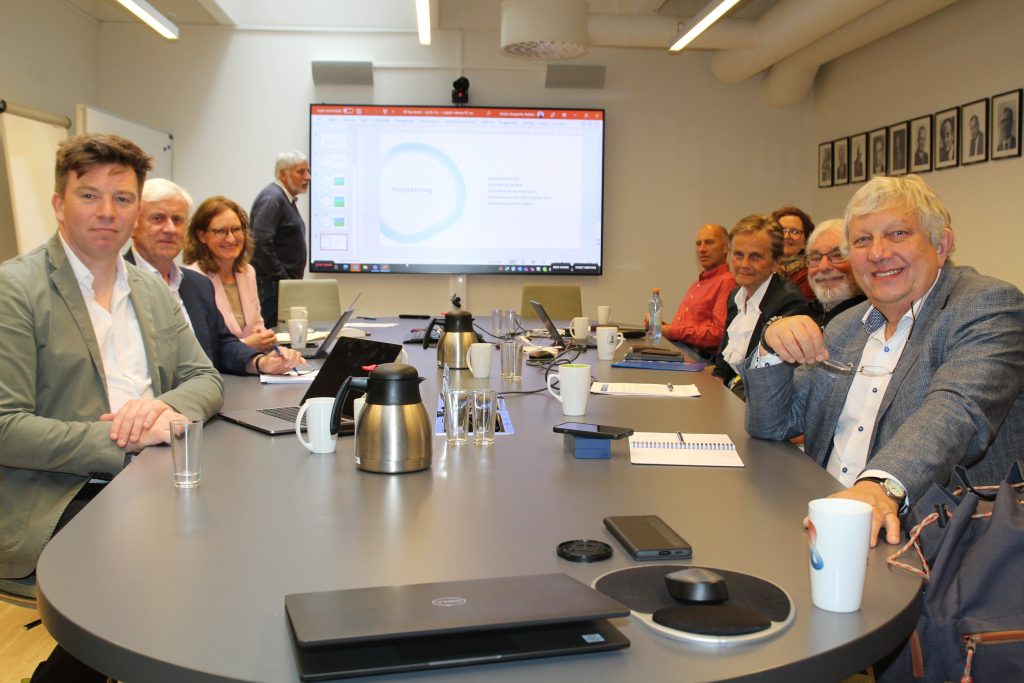
– I tend to think that developments over the last two decades have proven me right, and I was pleased to see that a recent book (2024) by two of my European colleagues, Anton Hemerijck and Manos Matsaganis, “Who’s Afraid of the Welfare State Now?”, seems to confirm this perspective. The welfare state is not under ‘de-construction’ – we can rather talk about a continuous re-construction project to encounter challenges of demographic change, international business cycles, social and economic structural change, and geopolitics.
– The proportion of Gross Domestic Product spent on social security and health has generally been stable or increasing in the (growing number of) OECD countries over the last 30 years, and social policies of various kinds have been introduced in more and more countries in the world, although the concept of ‘the welfare state’ is not part of the language everywhere. I think we can talk about ‘globalizing welfare’: the social role of the state is increasing in the world.
– How will you characterize the willingness of policymakers to adopt science advice in this field?
– I don’t think that I am in a position to make general statements on this, but I think it is fair to say that especially in the Nordic countries, but also in other European countries, there has been a long tradition since the 1960-70s to politically support both basic and applied social science research, and especially social welfare research, in order to provide governments and politicians with a best possible basis for policy decisions. Policymakers depend upon statistics, data, knowledge, and interpretations generated by academic research. Research findings are often used, or we could even say are necessary, to legitimize policy reforms, and researchers often play a role as active members of expert committees established by governments, thus furnishing bureaucratic and political actors with research-based advice.
– It is a common perception that the welfare state is more challenged today than in several decades. You will of course address this in your keynote, but can you already give a glimpse into your findings on this?
– The circumstances in which welfare states first arose and developed and the circumstances in which they operate today are very different. As mentioned, many factors affect future welfare state development. Constant reconstruction work is required, but that does not necessarily imply abandoning fundamental principles of overall public responsibility for welfare, social rights, and universal population coverage of social security. But the challenge of welfare state sustainability is in my view more critical now than 40-50 years ago.
– There is today talk about a global ‘polycrisis’ due to the experience of the Covid-pandemic, manifold wars and armed conflicts globally, persistent global refugee and migration crises, disruption of supply chains, increased energy and food insecurity, inflation and debt crises in many nations, accelerating climate change and climate-induced natural disasters, and – not least – the superpower USA’s recent withdrawal from international organizations and agreements, inducing increased geopolitical polarization and rivalry. The ‘polycrisis’ has a collateral damaging impact on the politics of welfare at national and international levels.
– Welfare states face interconnected challenges of economic, political and moral sustainability. Is the welfare state affordable: is it realistic to increase taxes or retain high taxes necessary to meet increasing demand for services for ageing populations? Can welfare issues remain on top of political agendas in a context with increased competition for public funding due to greater focus on security-related issues (defense, cyber, climate, etc)? Will trends towards increasing social inequality in many parts of the world lead to a social division of welfare? Can social solidarity in national welfare states be maintained if economic and political insecurity persist and national populations become more heterogenous?
– We can observe that both in and beyond Europe many national governments introduce social policy reforms to modify future growth of social expenditures, to expand employment, and to increase productivity, and on the international level there are examples of agreements to avoid “a race to the bottom” in terms of taxation necessary to finance welfare states, e.g. in the EU, which has instituted a minimum general VAT-tax of 15% and agreed on minimum national standards in various social policies; in the OECD, which initiated an agreement, now signed by 140 governments worldwide, on a global minimum corporate tax of 15% on big multinational companies. My hypothesis is, after all, that the European welfare state is resilient and that the idea of “the welfare state” will be further strengthened in other parts of the world.