
Rethinking Arctic Collaboration (2023–2025): Concluding Reflections
The Rethinking Arctic Collaboration project, coordinated by the Academia Europaea Bergen Hub at the University of Bergen and supported by UArctic funding (2023–2025), concluded in 2025 after two years of intensive dialogue, analysis, and international engagement. In its final year, the project shifted from mapping immediate geopolitical disruptions to articulating forward-looking scenarios for Arctic science diplomacy toward 2032, in anticipation of the Fifth International Polar Year. The initiative brought together partners from Europe, North America, and Indigenous institutions, creating a transatlantic arena for structured reflection on how Arctic cooperation can remain resilient under conditions of fragmentation and strategic uncertainty.
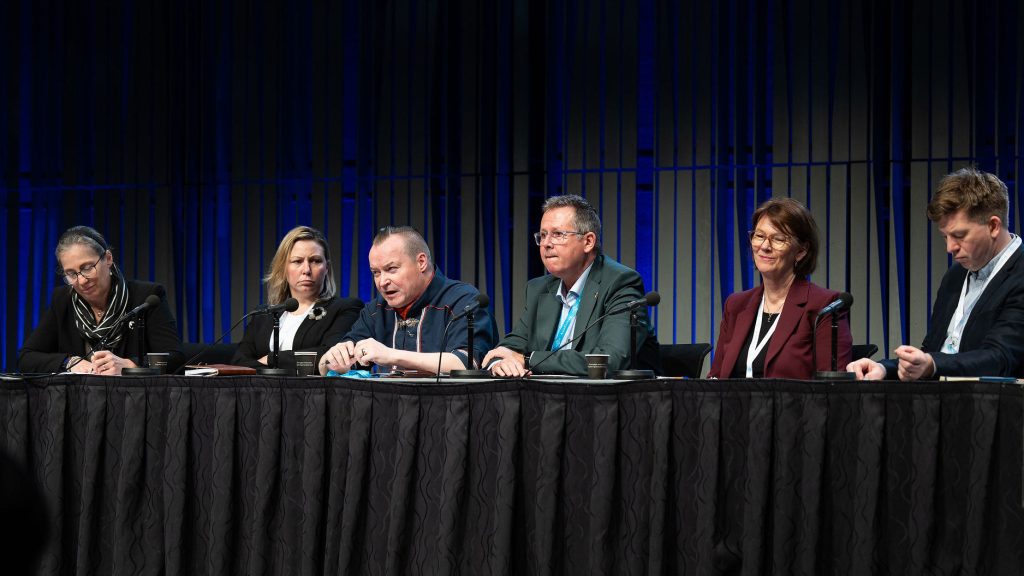
A central achievement in the concluding phase was the consolidation of a multidisciplinary consortium that bridged natural sciences, social sciences, policy expertise, and Indigenous knowledge systems. Workshops at Dartmouth College and sessions at the Arctic Circle Assembly in Reykjavík provided neutral platforms for strategic dialogue at a time when formal institutional cooperation—particularly within the Arctic Council framework—remained constrained. Rather than attempting to restore pre-2022 structures, the project focused on identifying adaptive cooperation models that combine scientific integrity, policy relevance, and inclusivity.
The Academia Europaea Bergen Hub has through this initiative reinforced its position as a convening arena for high-level reflection on Arctic science diplomacy
The project’s key analytical conclusion is that Arctic collaboration is not disappearing but transforming. While geopolitical tensions have weakened established institutional mechanisms, they have simultaneously underscored the strategic value of science as a channel for risk reduction, confidence-building, and long-term stability. The consortium emphasized three structural priorities for the coming decade: (1) safeguarding cross-border data sharing and scientific mobility; (2) embedding Indigenous leadership and knowledge co-production as a normative pillar rather than an add-on; and (3) developing complementary science diplomacy architectures aligned with global processes such as the UN Decade of Ocean Science and preparations for IPY 2032–33.
Equally important were the methodological and organizational lessons. The project demonstrated that flexibility in format and framing is essential in periods of rapid political change. In-kind institutional commitments—particularly from North American partners—enabled sustained engagement beyond the project’s financial scope. The integration of Indigenous perspectives, facilitated through collaboration with the International Centre for Reindeer Husbandry, proved not only ethically necessary but analytically transformative, broadening scenario-building exercises to include legitimacy, equity, and long-term governance resilience.
As the project concludes, its most durable outcome lies in the strengthened transnational network and the conceptual groundwork for a “next phase” of Arctic exceptionalism—one defined less by insulation from geopolitics and more by adaptive, knowledge-based cooperation under constraint. The Academia Europaea Bergen Hub has through this initiative reinforced its position as a convening arena for high-level reflection on Arctic science diplomacy, with long-term effects expected to unfold through forthcoming publications, policy contributions, and continued collaboration toward 2032.